B2B website development builds a site around a buying committee instead of a single shopper: several stakeholders, a longer research cycle, and a purchase decision that has to survive a forward to legal and finance before anyone signs anything. That changes almost every decision in the build, from page structure down to which stack a B2B website development company should recommend. This playbook walks through the process, the cost ranges we see in 2026, how to choose between an in-house hire, a freelancer, and a B2B website development agency, and what a site needs so it ranks in Google and gets quoted by ChatGPT and Perplexity at the same time.
What Makes B2B Website Development Different From a Marketing Site?
A B2B website's job is to move a committee through a research process over several visits, not close one visitor in a single session. Consumer sites optimize for a fast, emotional decision. A B2B site has to carry pricing logic, security detail, integration documentation, and case studies strong enough that a champion inside the buying company can forward the link to their CFO and get a yes without a follow-up call.
That means the content on the page is doing as much selling as the design. A homepage headline built for a fast emotional purchase does nothing for a buyer trying to work out whether your platform integrates with their ERP. Website development for B2B has to answer that question directly, usually within the first two sections of the page, or the visitor leaves and searches for a competitor who answered it.
In-House Team, Freelancers, or a B2B Website Development Agency: How Do You Decide?
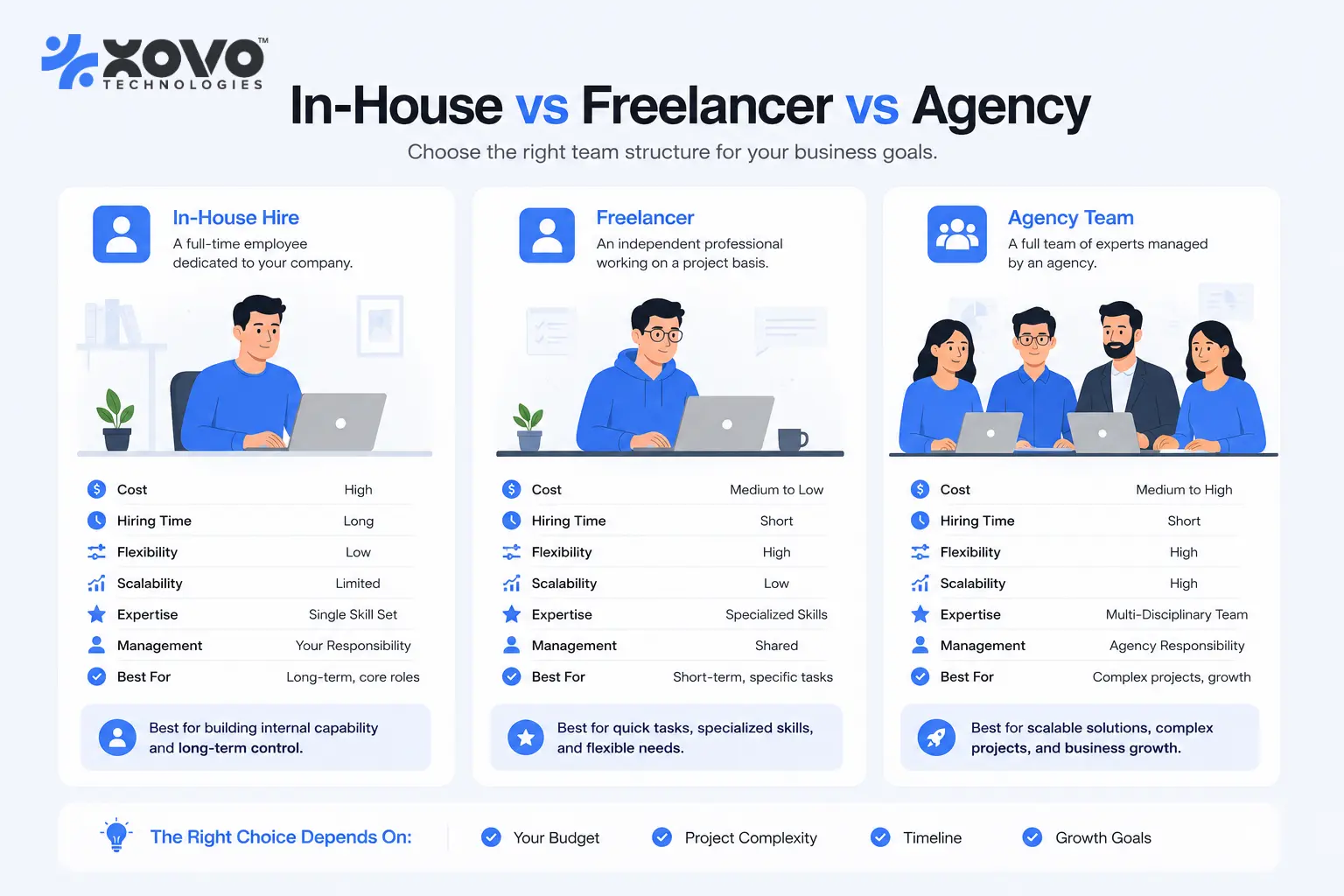
The right choice depends on how complex the build is and how often the site changes after launch. An in-house hire makes sense when you need daily edits and already have engineering leadership to manage the work. A freelancer can handle a small, tightly scoped site with a fixed page count. A B2B website development agency is the better call once the project needs design, engineering, SEO, and ongoing support handled by people who already work together.
| Option | Best for | Typical cost model | Ongoing support |
|---|---|---|---|
| In-house hire | Frequent changes, long-term product site | Salary plus benefits | Built in, limited to one person's bandwidth |
| Freelancer | Small, fixed-scope site | Fixed project fee | Usually none after handoff |
| Agency | Multi-stakeholder builds, integrations, SEO | Project fee or retainer | Ongoing, with a full team behind it |
At XOVO Technologies, we run these projects through one Full-Stack Development team. The same engineers who build the interface also wire up the integrations and the database, so one team is accountable for the whole site instead of three vendors pointing at each other when something breaks.
What Does the B2B Website Design and Development Process Look Like?
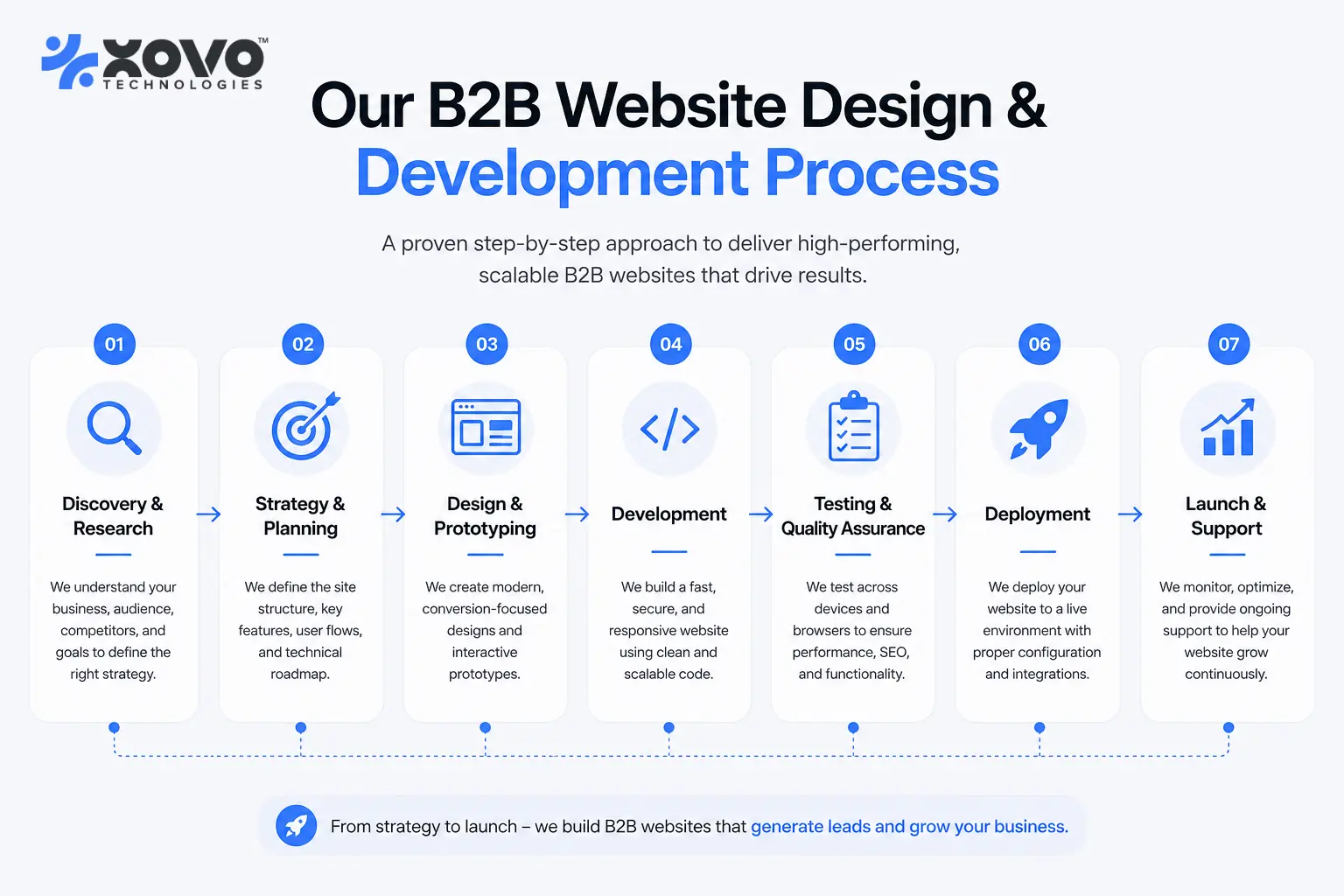
A B2B website design and development process runs through discovery, architecture, design, build, and QA, in that order, with stakeholder review built into every stage. Skipping stakeholder review until launch is the most common reason B2B site projects run over budget.
- Discovery and stakeholder mapping. Interview sales, marketing, and whoever owns technical credibility internally. Each of them needs the site to do something different.
- Information architecture. Map every page the buying committee will need, from pricing to security documentation, before anyone opens a design tool.
- Wireframes and UI design. Lay out each page's structure first, then apply visual design once the structure is approved.
- Content. Write the actual page copy, case studies, and technical detail. This is where most B2B sites fall short, because design gets the budget and content gets whatever is left over.
- Full-stack build. This is where XOVO Technologies' Full-Stack Development team turns the approved design into a working site: front end, back end, CMS, and every third-party integration.
- QA and compliance review. Test on real devices, check load speed, and confirm any compliance requirement, such as accessibility or data handling, is actually met.
- Launch and iteration. Ship the site, then watch analytics and search performance for the first 60 to 90 days and adjust.
How Much Does B2B Website Development Cost in 2026?
Cost depends almost entirely on how much custom engineering the site needs, not on page count alone. In our engagements, a template-based B2B site with a handful of pages runs roughly $8,000 to $20,000. A custom-built site with a design system, an insights or blog engine, and a handful of integrations typically runs $35,000 to $90,000. Sites that need a client portal, a pricing calculator, or an AI chat layer connected to internal systems usually land above that range.
The number that matters more than the sticker price is total cost of ownership. A cheaper site built on a page builder often costs more over two years in plugin fees, security patches, and rebuild work than a custom site would have cost up front. That calculation is worth running before picking a vendor, instead of comparing quotes side by side alone.
| Tier | Typical scope | Price range | Timeline |
|---|---|---|---|
| Template-based | 5 to 10 pages, no custom integrations | $8,000 to $20,000 | 6 to 8 weeks |
| Custom build | Design system, CMS, several integrations | $35,000 to $90,000 | 10 to 16 weeks |
| Platform-grade | Client portal, AI chat, complex integrations | $90,000 and up | 14 to 20+ weeks |
What Technology Stack Should Power a B2B Website in 2026?
Most B2B sites in 2026 run on a server-rendered JavaScript framework such as Next.js for the front end, a Node back end, and a Postgres database, with a headless CMS layered on top so marketing can publish without touching code. That combination gives you fast page loads, content that AI crawlers can actually read, and a codebase your team can extend later without starting over.
Integrations matter as much as the front-end framework choice. A B2B site rarely stands alone. It usually needs to talk to a CRM, a marketing automation platform, a scheduling tool, and sometimes an ERP or billing system. XOVO Technologies maintains more than 50 pre-built platform integrations for exactly this reason, so connecting a new site to Salesforce, HubSpot, or an internal system is usually a configuration task you can complete in days.
The other point worth settling before you sign a contract is who owns the code. A site built on a closed platform or a heavily customized page builder can leave you unable to change providers without a rebuild. Every site XOVO Technologies ships hands the client the full source code, and the model weights for any AI feature involved, so you are never locked into a single vendor to keep the site running.
What Should You Look For When Hiring B2B Website Developers?
Look for B2B website developers who can show you B2B sites they have actually shipped, not consumer e-commerce work relabeled as B2B. The buyer psychology, page structure, and sales cycle are different enough that consumer-site experience does not transfer cleanly.
A few specific things worth checking before you sign anything:
- Ask to see the code ownership terms in writing. You should own the source code and any custom integrations outright. A license to access a template the vendor controls is a different arrangement entirely.
- Ask who handles the site after launch. A developer with no support plan leaves you stuck the first time something breaks.
- Ask how they structure pages for search engines and for AI answer engines specifically, separate from the general design review.
- Ask for a reference from a client whose industry and sales cycle actually resemble yours.
How Do You Build a B2B Site That AI Search Engines Can Actually Read?
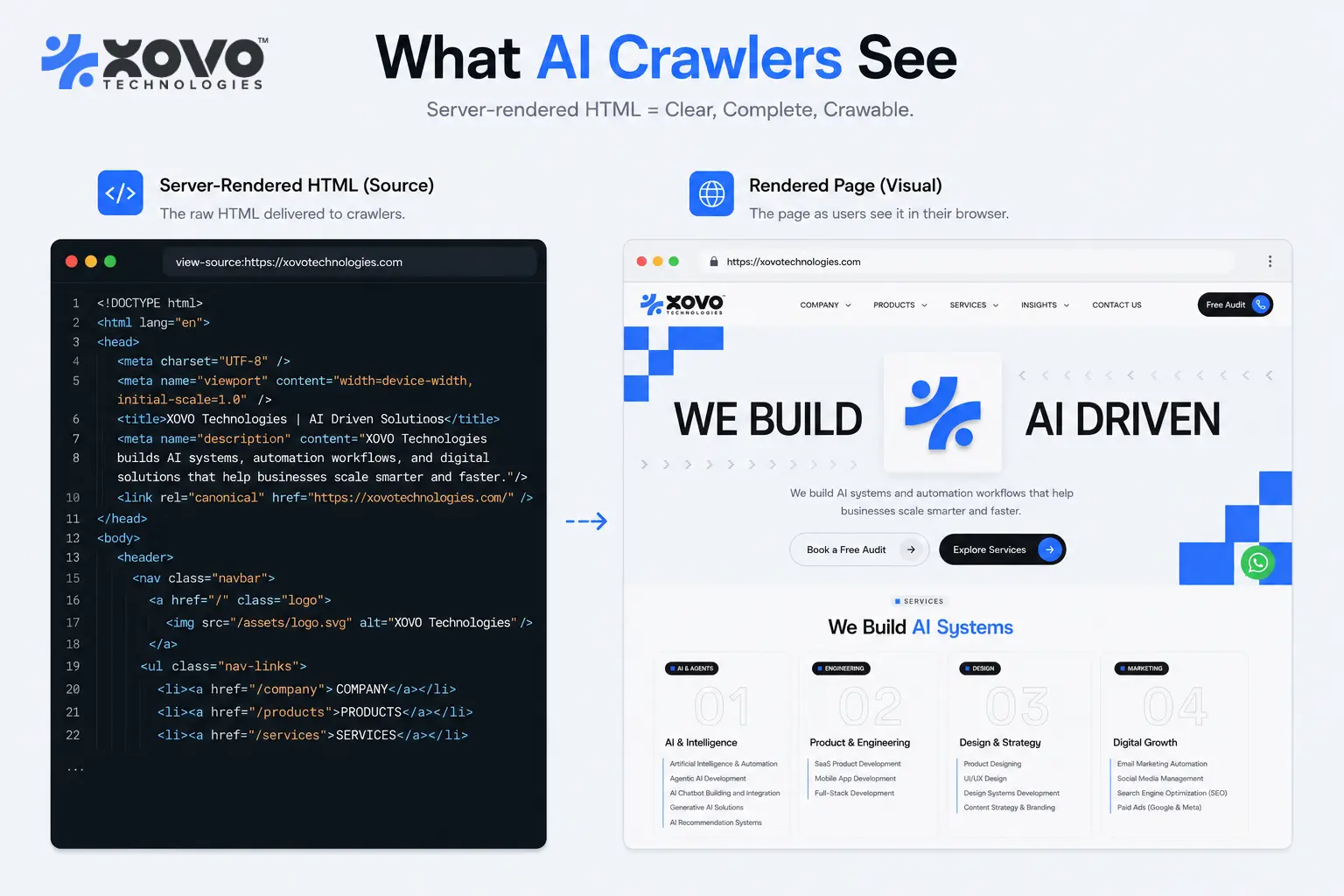
Most AI crawlers, including GPTBot, ClaudeBot, PerplexityBot, and OAI-SearchBot, read the raw HTML your server sends and do not run your site's JavaScript. Google's Gemini is the exception, since it rides on Googlebot's own renderer. If your B2B site depends on client-side rendering to display its core content, most AI answer engines never see that content at all.
That is why the framework choice matters more for B2B sites in 2026 than it did five years ago. A server-rendered stack, built with something like Next.js or a properly configured React setup, sends real content in the initial HTML response instead of an empty shell that fills in after JavaScript runs. Google's March 2026 core update also penalized scaled, templated, thin content specifically, so a site built from the same boilerplate page repeated across dozens of URLs is now a liability, not a shortcut.
The other shift worth planning around: AI Overviews, ChatGPT, and Perplexity increasingly answer by quoting a short, self-contained passage instead of only linking out. Pages that answer a real question directly in the first few sentences under each heading get quoted more often than pages that bury the answer three sentences down.
What Belongs on a B2B Website Beyond the Homepage?
A B2B site needs enough distinct pages to answer every stage of a buying committee's research. At minimum, that means:
- A homepage that states who you serve and what problem you solve, in plain language, above the fold
- Individual product or solution pages, one page per offer
- A pricing or scoping page, even if exact numbers require a call
- Case studies with specific, real outcomes
- A security or compliance page if you sell into regulated buyers
- An insights or resources hub that keeps growing after launch
- A direct path to book a call or demo, linked from every product page
The security or compliance page deserves particular attention if you sell to regulated buyers in healthcare, finance, or government. Buyers in those categories often ask directly whether you support private or air-gapped hosting before a deal moves forward, so stating your position on data handling clearly, instead of leaving it to a sales call, shortens the sales cycle.
Should AI Features Be Part of Your B2B Website Development Services Scope?
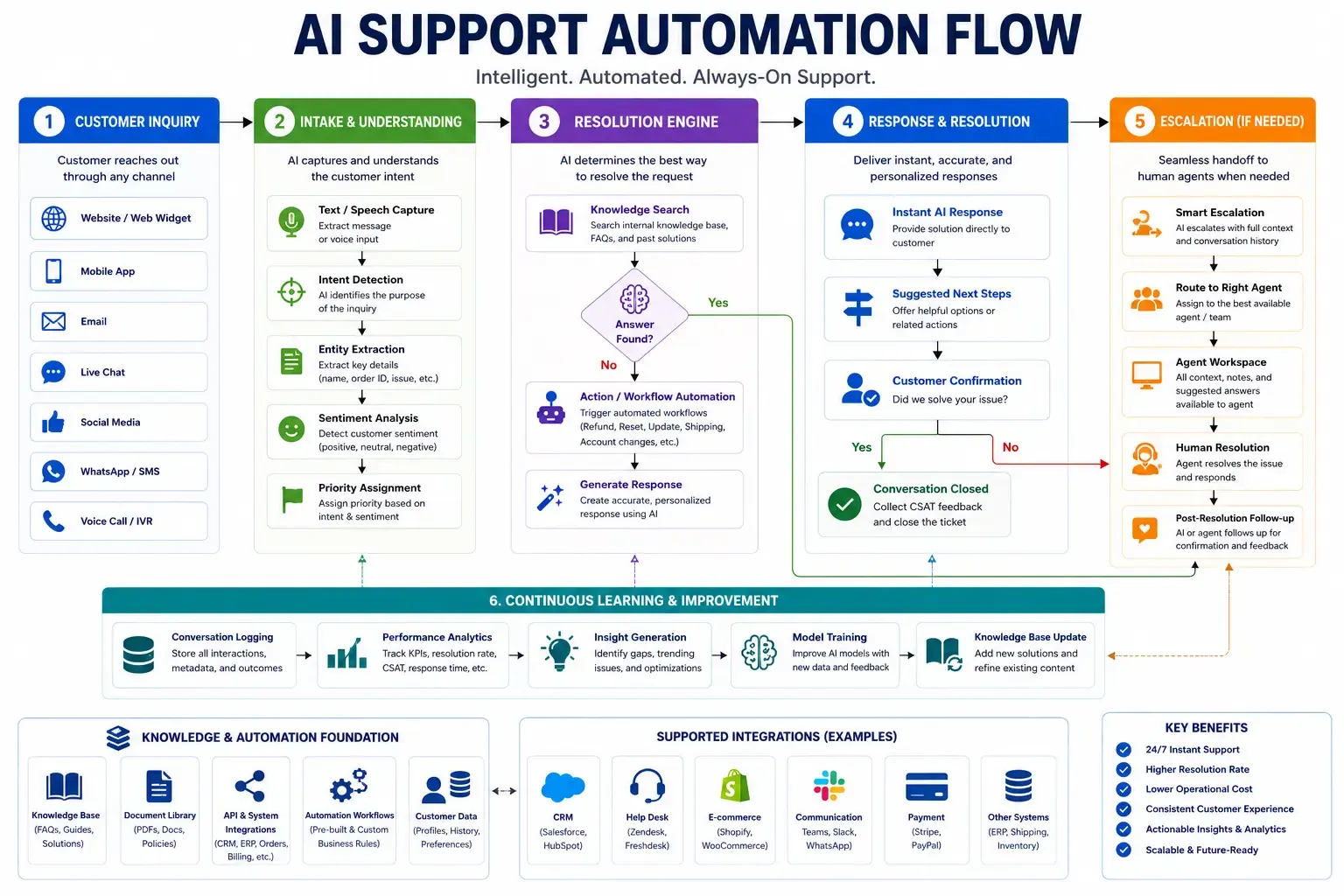
Yes, if your visitors ask repetitive questions that a well-scoped assistant can actually answer. XOVO Technologies' Enterprise AI Chatbot resolves up to 80% of customer queries without a human agent when it is built on the company's real product and support data instead of a generic script.
The chat widget itself is usually a retrieval-augmented generation pipeline connected to a vector database such as Pinecone or pgvector, orchestrated with a framework like LangGraph, sitting behind the same authentication as the rest of the site. Our CTO, Sufi Inam Ul Hassan, leads the engineering team that builds these integrations, and the standing rule on every one we ship is human-in-the-loop escalation by default: the assistant hands off to a person the moment a question goes outside what it can answer confidently. Our AI Chatbot Building and Integration service scopes this work alongside the website build itself, in the same project and the same timeline.
How Do You Maintain a B2B Website After Launch?
A B2B website needs monitoring, security patching, and content updates on a regular schedule for as long as the site is live. Uptime monitoring and dependency updates catch problems before a visitor does. Content updates, including new case studies and new integration pages, keep the site relevant to whatever the sales team is currently pitching.
The support model matters more than most buyers expect at contract signing. A site with no support plan behind it works fine until a plugin breaks a form or a security patch goes unapplied for a year. XOVO Technologies backs every build with managed support and 24/7 monitoring after launch, so issues get caught and fixed before they turn into a support ticket from a prospect who couldn't load your pricing page.
Budget for maintenance the way you budget for the build itself. A reasonable starting point is a monthly retainer covering hosting, monitoring, and a fixed number of content or fix hours, scaled up if the site includes an AI chat layer or integrations that need their own oversight.
How Long Does a B2B Website Development Project Actually Take?
A straightforward B2B site with a handful of pages and no custom integrations typically takes 6 to 8 weeks from kickoff to launch. A custom build with a design system, a CMS, and several integrations usually runs 10 to 16 weeks. Add an AI chat layer or a client portal and plan for the higher end of that range, since those pieces need their own QA pass on top of the core site.
The timeline slips almost every time for the same reason: content. Design and engineering can move on schedule. Getting case studies approved by legal, or getting a subject-matter expert to sit down and write the technical detail a page needs, is usually what pushes a launch date. Building the content plan into week one of the process, not week ten, is the change that keeps most B2B projects on schedule.
If you're planning a B2B website build and want a second opinion on the architecture, the stack, or whether AI features belong in scope, book a free AI audit with XOVO Technologies before you sign with a vendor.